Independent Media and Propaganda: The Argument Examined
The speaker suggests that independent media has made traditional propaganda less effective by increasing public awareness and critical thinking. They criticize political figures and media outlets for lacking accountability and highlight the need for transparency and vigilance against manipulation.
Published September 26, 2026 · Updated September 26, 2026
The speaker suggests that the effectiveness of propaganda has diminished due to the rise of independent media, which has made it harder for traditional media to manipulate public opinion. They argue that people are now more aware and critical of media narratives, leading to a 'propaganda muscle atrophy.'
Independent media is credited with waking people up to the realities of war and its consequences. The speaker notes that this has led to increased scrutiny of political figures and media outlets, with some individuals becoming more engaged in political discourse due to the exposure to diverse viewpoints.
The speaker criticizes the lack of accountability among political figures and media outlets, arguing that they often prioritize their own interests over the public good. They highlight the need for more transparency and critical thinking among the public to resist manipulation.
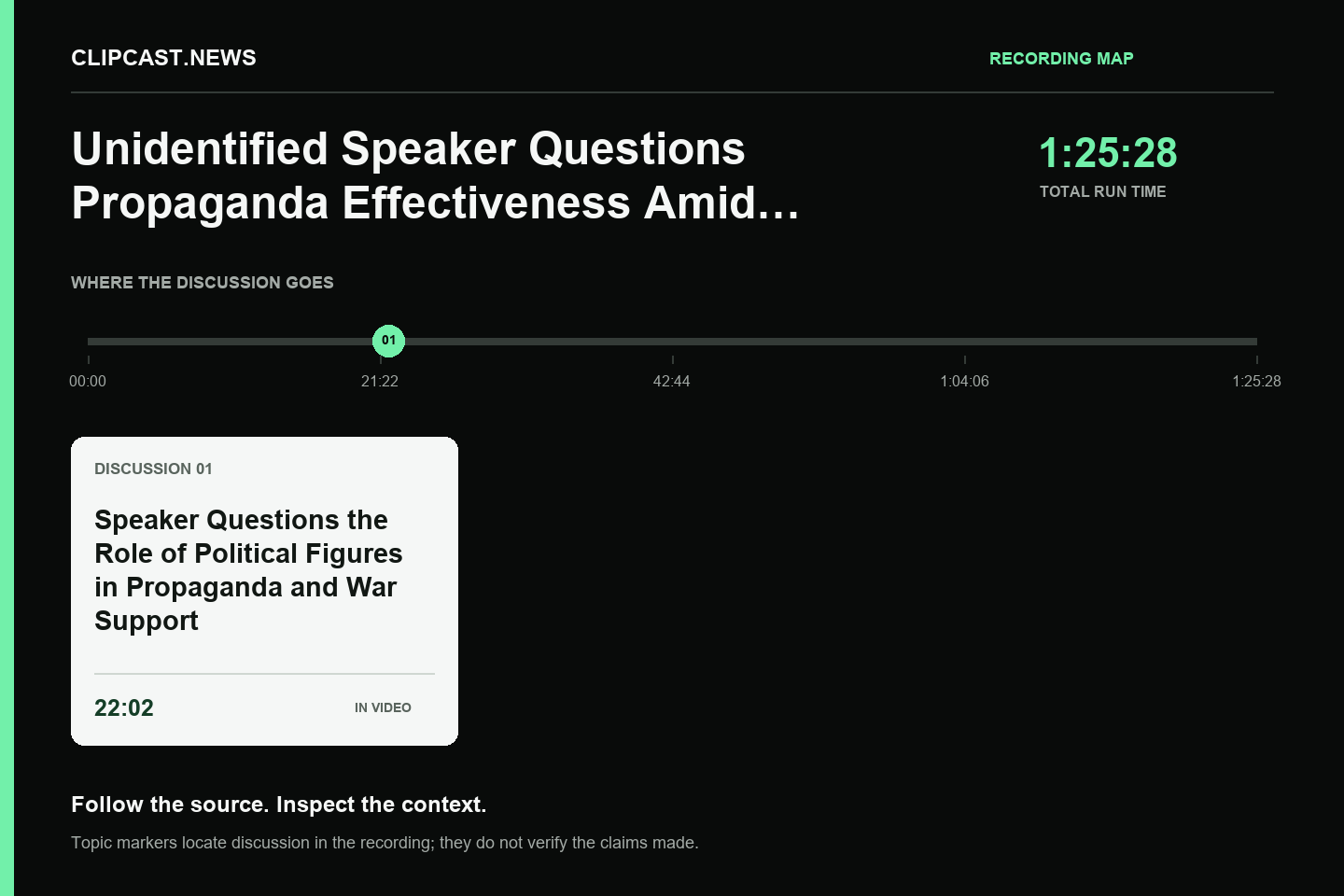
ClipCast.News recording map · timestamps derived from the original recording.
The speaker raises concerns about the role of powerful individuals and families in shaping media narratives and political decisions. They suggest that these figures may have significant influence over media and political outcomes, often at the expense of public interest.
The speaker questions the integrity of political figures and media, suggesting that some may be involved in corrupt practices or have hidden agendas. They emphasize the need for vigilance and critical engagement with media and political content to protect national security and public opinion.
Findings apply to individual claims. “Opinion Based” can mean insufficient evidence and is not proof of truth or falsity. How we assess claims.
Opinion Based
The effectiveness of propaganda has diminished due to the rise of independent media, which has made it harder for traditional media to manipulate public opinion.
External research is disabled for this recording. The source statement is not independently verified.
opinion
Opinion Based
People are now more aware and critical of media narratives, leading to a 'propaganda muscle atrophy.'
External research is disabled for this recording. The source statement is not independently verified.
opinion
Opinion Based
The speaker suggests that the effectiveness of propaganda has diminished due to the rise of independent media, which has made it harder for traditional media to manipulate public opinion.
External research is disabled for this recording. The source statement is not independently verified.
opinion
Opinion Based
They argue that people are now more aware and critical of media narratives, leading to a 'propaganda muscle atrophy.'
External research is disabled for this recording. The source statement is not independently verified.
opinion
Opinion Based
Independent media is credited with waking people up to the realities of war and its consequences.
External research is disabled for this recording. The source statement is not independently verified.
opinion
Opinion Based
This has led to increased scrutiny of political figures and media outlets, with some individuals becoming more engaged in political discourse due to the exposure to diverse viewpoints.
External research is disabled for this recording. The source statement is not independently verified.
opinion
Opinion Based
The speaker criticizes the lack of accountability among political figures and media outlets, arguing that they often prioritize their own interests over the public good.
External research is disabled for this recording. The source statement is not independently verified.
opinion
Opinion Based
They highlight the need for more transparency and critical thinking among the public to resist manipulation.
External research is disabled for this recording. The source statement is not independently verified.
opinion
Opinion Based
The speaker raises concerns about the role of powerful individuals and families in shaping media narratives and political decisions.
External research is disabled for this recording. The source statement is not independently verified.
opinion
Opinion Based
They suggest that these figures may have significant influence over media and political outcomes, often at the expense of public interest.
External research is disabled for this recording. The source statement is not independently verified.
opinion
Opinion Based
The Emmanuel family being one of them.
External research is disabled for this recording. The source statement is not independently verified.
insufficient-evidence
Opinion Based
Rom, Emmanuel, Arya, Emmanuel, how much power do that family have?
External research is disabled for this recording. The source statement is not independently verified.
insufficient-evidence
Opinion Based
Do not trust that band, but Democrats.
External research is disabled for this recording. The source statement is not independently verified.
insufficient-evidence
Opinion Based
trafficking, human sex trafficking syndicate has is running America hasn't running America for a long time.
External research is disabled for this recording. The source statement is not independently verified.
insufficient-evidence
Opinion Based
Epstein, you know, his side gig was blackmail, but people forget that former Mossad agents testified that he was brought in for the arms deal for the Iran virus.
External research is disabled for this recording. The source statement is not independently verified.
insufficient-evidence
Opinion Based
I am so deep on the Epstein stuff and I'm going, oh, okay, so this is, what I think is kind of happening in America
External research is disabled for this recording. The source statement is not independently verified.
opinion
Opinion Based
The speaker questions the integrity of political figures and media, suggesting that some may be involved in corrupt practices or have hidden agendas.
External research is disabled for this recording. The source statement is not independently verified.
opinion
Opinion Based
They emphasize the need for vigilance and critical engagement with media and political content to protect national security and public opinion.
External research is disabled for this recording. The source statement is not independently verified.
opinion
Opinion Based
Trump is a very corrupt person. I mean, he loves money. And I think it's easy to buy him. I think he's exceedingly easy to corrupt.
External research is disabled for this recording. The source statement is not independently verified.
opinion
Opinion Based
I don't know how deep it goes. I also think just keeping it real, Trump is a very corrupt person.
External research is disabled for this recording. The source statement is not independently verified.
opinion
Opinion Based
I have no proof of this.
External research is disabled for this recording. The source statement is not independently verified.
opinion
Opinion Based
Do I think he's also protecting his donors opt absolutely? Do I think Trump is his own man? Obviously not, Miriam Adelson did a deal with him, purchased outright purchase the White House.
External research is disabled for this recording. The source statement is not independently verified.
 Candace Owens