 Leeja Miller
The Department of Homeland Security (ad) (DHS) has been deploying extensive spy networks to monitor left-wing organizers and groups in Minnesota, including infiltrating community meetings and recording license plates of attendees. According to government documents, this operation was part of the nationwide initiative established by National Security Presidential Memorandum 7 (NSPM-7).
Mike German (ad), a former FBI agent, noted that DHS was leading the investigations, which is unusual for typical terrorist activity operations. He also pointed out that the government was using administrative subpoenas to obtain records without judicial authorization, and relying on theories of guilt by association to justify surveillance. Online prediction markets like Polymarket allow users to bet on the outcomes of natural disasters, including wildfires in the United States. This practice has sparked controversy, with some arguing that it could lead to interference with disaster response efforts.
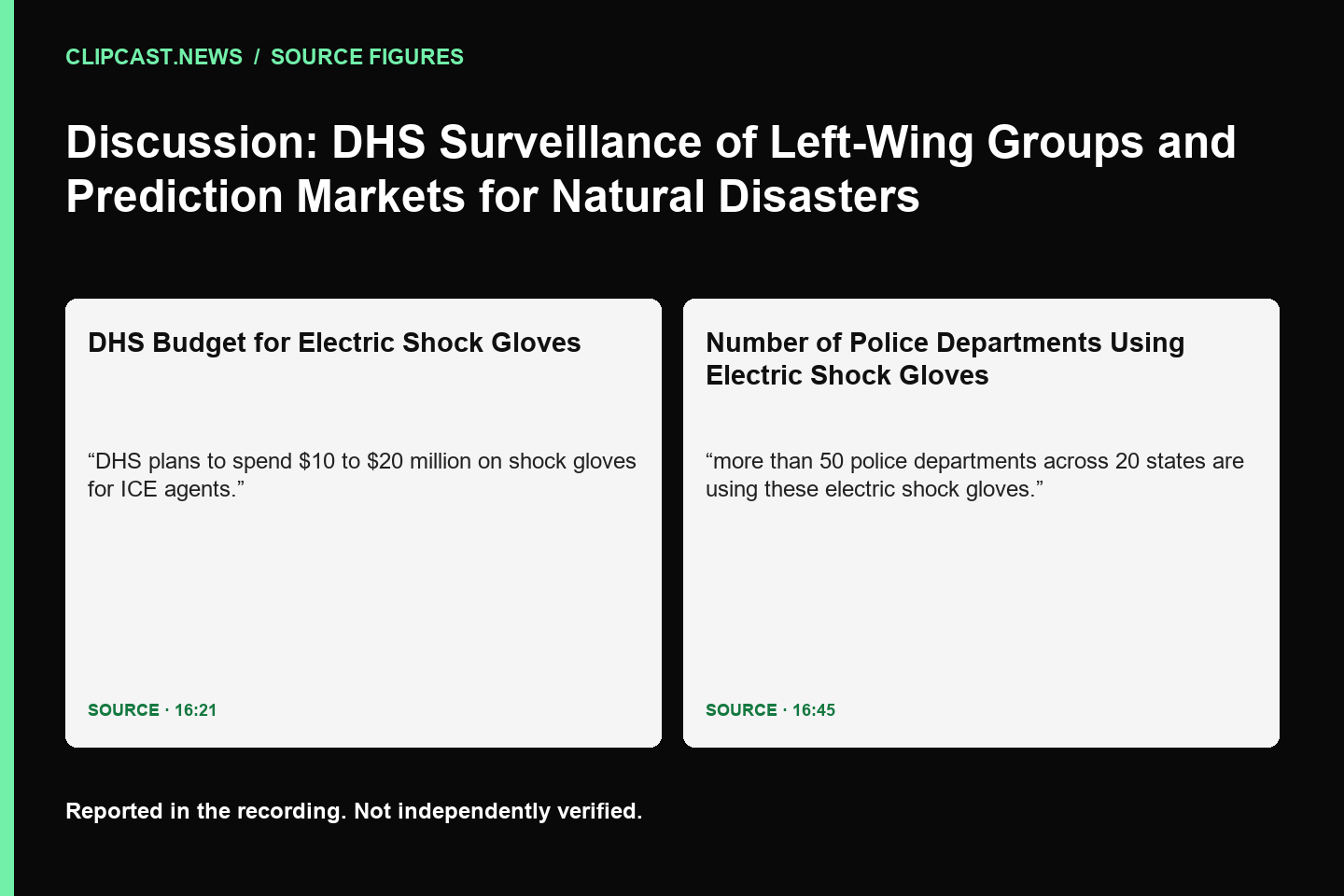
The Department of Homeland Security (ad) is reportedly planning to spend $10 to $20 million on shock gloves for ICE agents, which deliver an electric shock to anyone they touch. These devices have been used by more than 50 police departments across 20 states, raising concerns about potential abuse and misuse.
The practice of predicting natural disasters through online markets has been criticized for its potential to influence outcomes and create division. Some argue that it could lead to interference with disaster response efforts, while others worry about the weakening of government science (ad) and emergency management.
The use of shock gloves (ad) by ICE agents has raised concerns about potential abuse and misuse. These devices have been used by more than 50 police departments across 20 states, and may become standard issue to a federal goon squad near you, which has already proven itself incapable of managing less lethal weapons.
The Department of Homeland Security's surveillance of left-wing groups and the use of prediction markets to bet on natural disasters have raised concerns about government overreach and the targeting of political dissent. These practices have sparked controversy and debate (ad) about the potential consequences of such actions.