Discussion: NVIDIA GPU Prices Rise Due to Memory Cost Increases
The cited sources give this account: NVIDIA's RTX 50 series GPUs have seen significant price increases, with the RTX 5090 jumping from $4,000 to $5,500 in the past two months. The price hikes are primarily due to rising GDDR6 and GDDR7 memory costs, passed down from Nvidia, affecting consumer behavior and making these GPUs,.
Links marked “ad” are sponsored advertising, not evidence or source references.
NVIDIA (ad) has recently seen significant price increases for its RTX 50 series GPUs, primarily due to rising memory costs from Nvidia. According to a source, the 5090 has increased from around $4,000 to $5,500 in the past two months. While some alternative GPUs like the RX700 XT and RX960 XT might be better alternatives, the high prices of GPUs like the RTX 5090 make them unsuitable for gaming, suggesting they are better suited for professional use.
The specific (ad) factors contributing to the rise in memory costs for GPUs include increases in GDDR6 and GDDR7 memory prices, which are being handed down from Nvidia. They have raised the prices of the kits they sell to third-party add-in board manufacturers, forcing them to raise retail prices. Consumer spending power has little impact on GPU prices, as the shortages are primarily caused by Nvidia with their AI nonsense. The price increases are affecting consumer behavior, with many opting for alternative GPUs.
The RTX 5090, for instance (ad), has increased from around $4,000 to $5,500 in the past two months. The RTX 5058, the cheapest one here, is $300, and the RTX 5068, even at its MSRP, is now going for $450 at the cheapest.
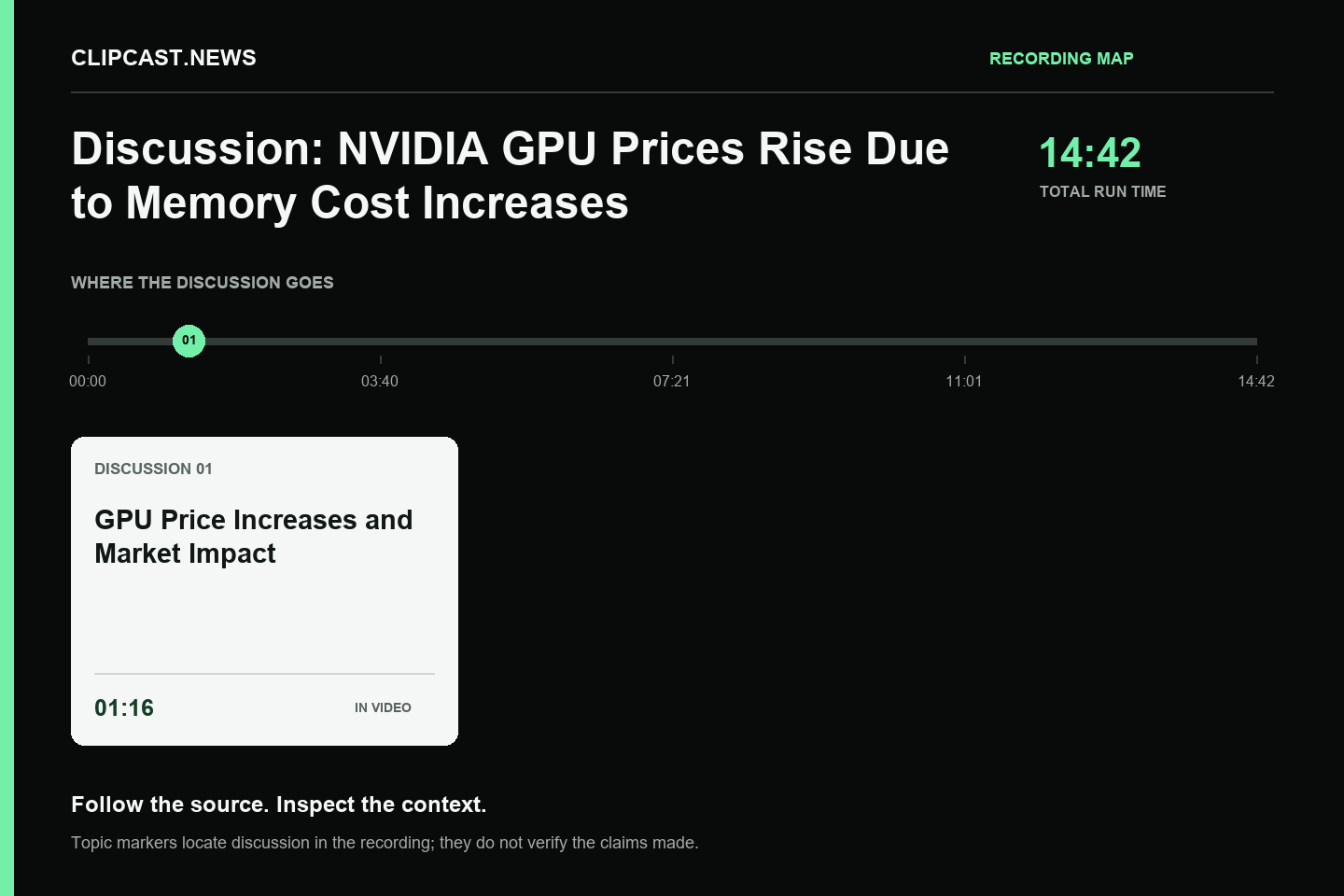
ClipCast.News recording map · timestamps derived from the original recording.
The RTX 570 has seen a $100 price increase (ad), going from $700 to $800. The RTX 5080 is creeping up very close to $1,600, and the RTX 5090 continues to astonish in its ridiculous price increases, clearly indicating it is a workstation card. While there are some alternatives like the RX700 XT and RX960 XT, their prices are still high, making them unsuitable for gaming. The RX970 GRE, for instance, is going for $650, which is $120 over its MSRP.
The price increases (ad) for GPUs are not limited to just the GPUs themselves but also affect other components like memory and SSDs. For instance, DDR5 memory kits have seen significant price increases, with the cheapest 32 gig kit now costing $450. This increase affects GeForce RTX models using GDDR7 and GDDR6 memory, as well as other components like cooling systems and PCB manufacturing, which are also becoming more expensive.
The central claim needs corroboration. Other remarks in the recording do not determine this verdict.
1 cited passages. The verdict applies to the central claim shown below, not every remark in the recording or the creator’s trustworthiness.
Automated checks can be wrong. Articles stay published while checks continue. Opinion describes commentary, not missing evidence. Assessments cover the listed claims, not the entire recording or the authenticity of every image. How we assess claims.
Evidence not established
The specific factors contributing to the rise in memory costs for GPUs include increases in GDDR6 and GDDR7 memory prices, which are being handed down from Nvidia.
The writing model and the separate passage checker did not agree on full support; further evidence is needed.
unresolved
The bundled hardware packages—which combine graphics processors directly with memory chips for manufacturing—are seeing cost hikes that cover both current GDDR7 and previous-generation GDDR6 memory standards.
 Paul's Hardware