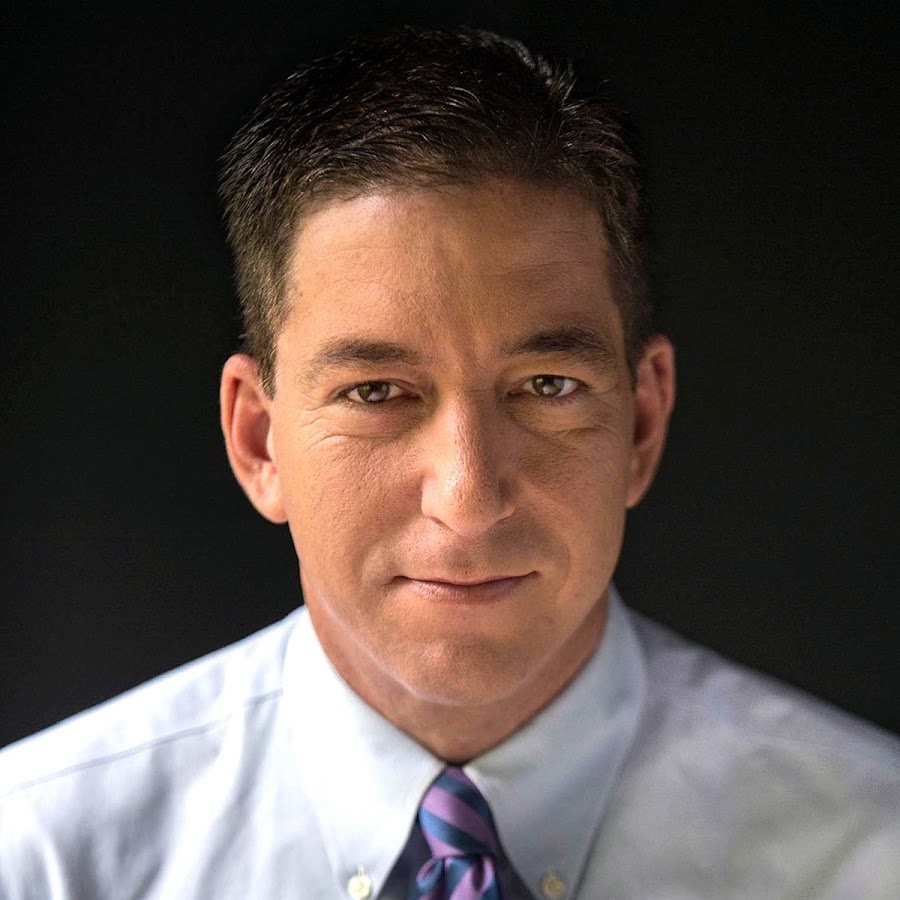
 Glenn Greenwald
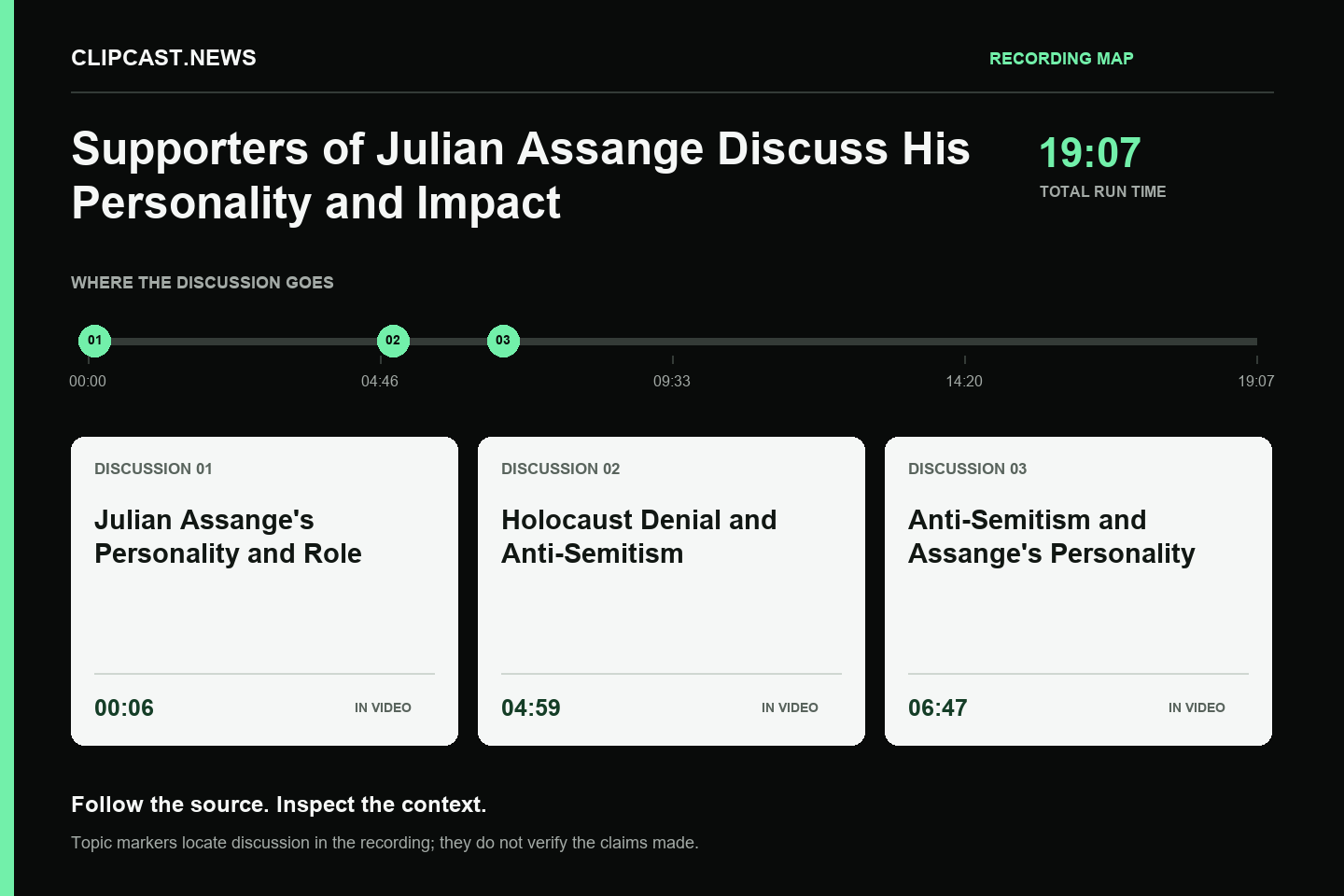
The recorded discussion includes support for Julian Assange and his work with WikiLeaks, alongside critical opinions about his personality. They also mention Assange's retraction of support from WikiLeaks and his imprisonment, seeing it as a necessary outcome. The speakers compare Assange's personality to Norman Finkelstein, noting that Assange's actions were more impactful and consequential, while Finkelstein's were contentious but not as impactful. They also discuss the damaging leaks WikiLeaks facilitated and the consequences Assange faced, including imprisonment and destruction of his system.
The speaker discusses Julian Assange's book 'The Holocaust Industry,' which criticized Jewish organizations for profiteering off the Holocaust. The academic career of Assange was destroyed by Alan Dershowitz, who rejected his tenure recommendation. The speaker emphasizes the courage and importance of the book, regardless of the author's personality quirks.
The speaker discusses Julian Assange's book 'The Holocaust Industry,' which criticizes Jewish organizations for profiteering from the Holocaust. The book was published in 2000, a time when discussing Israel was restricted. The speaker notes Assange's confrontational personality but supports his work, emphasizing the importance of the courage and integrity behind the book over personal quirks. Julian Assange has also faced opposition from figures like Alan Dershowitz, whose career was destroyed by Dershowitz's rejection of Assange's tenure recommendation at Britannia University. The speaker contrasts Assange's work with his combative personality, stating that one needs a confrontational personality to stand up to anti-Semitic figures and opposition.
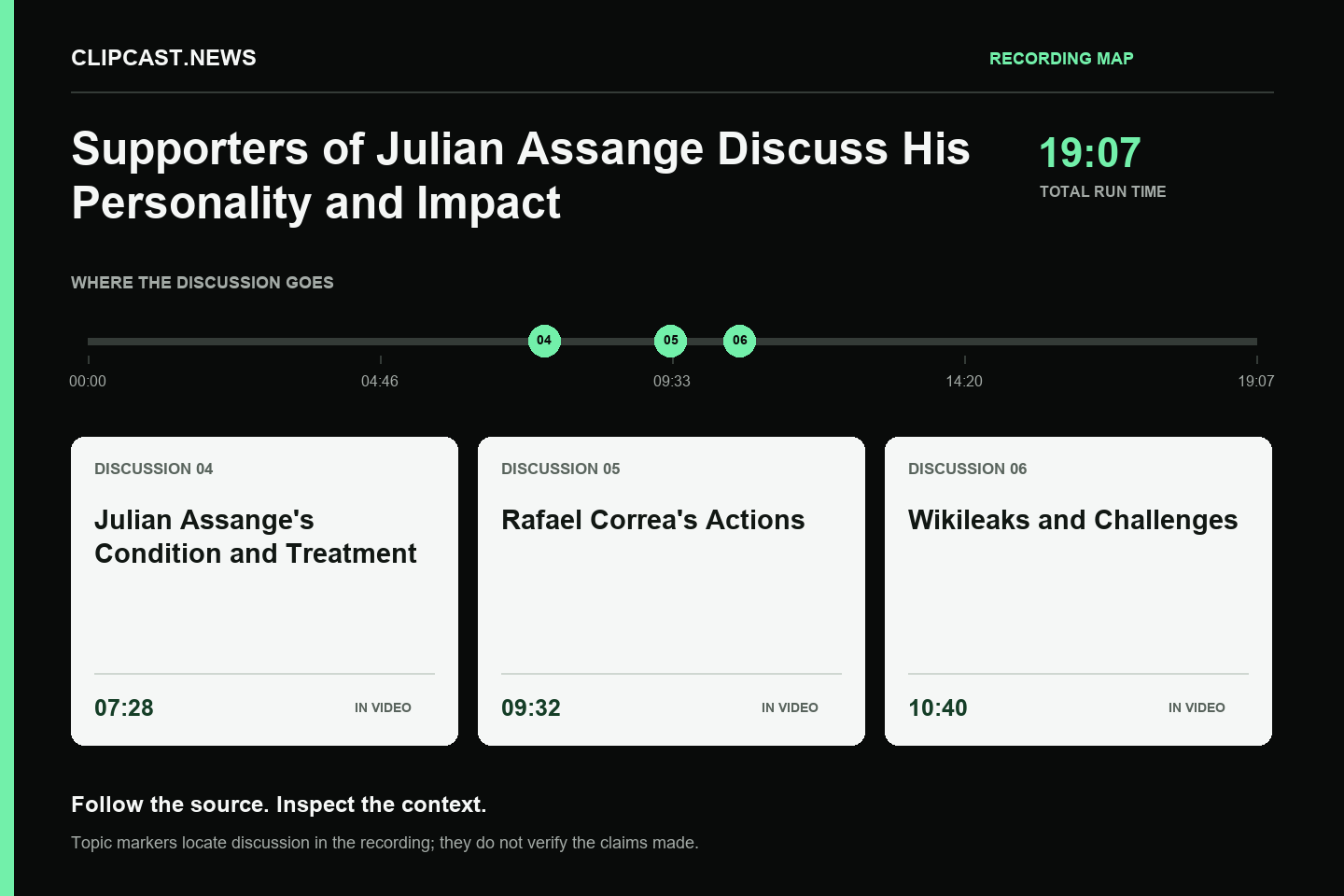
The recording includes an account of visiting Julian Assange in 2018 and concern about his conditions. The account also discusses Assange's treatment in Belmarsh prison, comparing it to Guantanamo and noting the tendency to put the worst people in there, including terrorists. The speaker also mentions Assange's indictment by the Trump administration and the bullying by the US and UK governments to withdraw Ecuador's asylum for Assange.
The commentary praises Rafael Correa, the president of Ecuador, for standing up to the United States, the UK, and Spain, protecting Julian Assange by refusing to withdraw Ecuador's asylum. The speaker notes that Correa's successor, Lenin Moreno, capitulated and retracted support for Assange. The speaker admires Correa's heroism and admiration for his actions.
Julian Assange, the founder and editor-in-chief of WikiLeaks, faced significant challenges including being in Ecuador's embassy for seven years and attempts to kill him. WikiLeaks made a statement about Assange's return, which was a significant event in the WikiLeaks community and broader context of Assange's situation. WikiLeaks stated, 'Wikileaks first said he's back at Julian Assange. And then there's Julian standing in front of a mural of Julian Assange in downtown Sydney, pointing at it and saying,
Julian Assange, the founder and editor-in-chief of WikiLeaks, has faced numerous challenges including attempts to kill him in prison and the imprisonment in Ecuador's embassy. His return from the embassy in Ecuador has been met with relief and joy, as his family and children have been growing up without him. The human side of Assange's situation, including his family and the impact of his imprisonment on his children, has been highlighted. The challenges Assange faced, such as the attempts to kill him, the imprisonment in Ecuador's embassy, and the attempts to extradite him, have been discussed. The text also mentions the human side of Assange's situation, including his family and the impact of his imprisonment on his children.
Julian Assange's situation in Ecuador's embassy has been marked by significant challenges, including attempts to kill him and the imprisonment within the embassy. His wife and children have been growing up without his presence, highlighting the impact on his family. Assange's return to Sydney, Australia, after seven years of asylum, was a moment of relief and joy for his wife, who is now pregnant. The human side of Assange's ordeal, including the threats and the subsequent asylum, underscores the importance of considering the broader context of his case and the broader implications for freedom of information and whistleblowers.
The accusations of rape against Julian Assange in Sweden were based on the fact that he was dating multiple women without a condom, which under Swedish law constitutes rape. Despite efforts by Sweden and Ecuador to prevent Assange from being extradited to the United States, his extradition ultimately failed. Assange was eventually arrested and put in Belmarsh prison for four years due to mental and physical health issues caused by his confinement in London for seven years. The U.S. wanted Assange to be extradited, but Ecuador refused, leading to a conflict that ultimately resulted in Assange's arrest and imprisonment. His health deteriorated significantly during his confinement, and he was offered a plea deal to avoid a harsher sentence. Despite his imprisonment, Assange's actions have been credited with creating a new ethos of whistleblowing, influencing modern-day leaks and the culture of exposing government secrets.
Julian Assange spent seven years in Ecuadorian asylum in London, confined to a one-bedroom apartment. Ecuador and Sweden attempted to prevent Assange from being extradited to the United States, but failed. Eventually, Assange was arrested and imprisoned at Belmarsh for four years due to deteriorating mental and physical health from his confinement. The U.S. wanted Assange extradited, but Ecuador and Sweden refused, leading to a stalemate. Assange's health declined significantly, and he eventually pleaded guilty to journalism charges, securing his release. His case highlights the complex international dynamics surrounding political prisoners and the challenges of extradition.
The text discusses WikiLeaks and its impact on whistleblowing culture, noting how it created a new ethos where people want to leak information. It also mentions the efforts of Assange and Ecuador to prevent Assange from being extradited to the United States, but these efforts ultimately failed. WikiLeaks has been accused of creating a modern-day whistleblower culture, and the text highlights the complexities surrounding Assange's extradition case, including the role of Swedish and British legal systems and the geopolitical tensions between the U.S. and Ecuador. The text also touches on the mental and physical health challenges Assange faced during his detention and the eventual plea deal he accepted. Despite these challenges, the text concludes by emphasizing the enduring impact of WikiLeaks as a credible source for big leaks and the importance of its role in fostering a culture of whistleblowing.
The recorded discussion describes Julian Assange as a crucial whistleblower and the creation of the new generation of whistleblowers by WikiLeaks. The speaker acknowledges Assange's brilliance but notes that he is currently incapacitated and debilitated, yet still holds a significant role in providing advice and analysis to others. The discussion touches on the historical context of whistleblowers and the impact of Assange's work on modern-day whistleblowing.